
There’s a moment many homeowners know too well. Winter passes, the snow melts, and you step into the garage expecting order, but something feels off. A shelf is slightly warped, a panel is loosening, and the system that once felt solid no longer does.
It starts subtly, then becomes more noticeable with time. As seasons change, fasteners loosen, materials shift, and weight distribution begins to fail.
This isn’t just wear and tear; it’s the environment at work. Climate plays a bigger role than most expect, gradually impacting the performance of garage storage systems.
Once you notice it, you start seeing the pattern everywhere.
- Colorado’s freeze-thaw cycle is one of the biggest hidden reasons storage systems fail
- Most systems fail due to material mismatch, not just poor installation
- Load shifting and wall structure play a bigger role than homeowners expect
- Long-term durability depends on design, not just storage products
Why Garage Storage Systems Fail Early
Most Garage Storage Systems don’t fail because of misuse.
They fail because they’re built for mild environments, not for places where temperatures swing wildly within a single day.
Colorado garages experience heat in the afternoon, freezing cold at night, and moisture shifts that quietly weaken materials over time. This constant expansion and contraction creates stress points that don’t show up immediately but become clearly visible in any garage remodel before and after comparison.
The damage builds gradually: a screw loosens slightly, a panel shifts off-center, and a once-solid shelf begins to flex under weight.
By the time homeowners notice it, the system is already compromised.
Here’s what most people miss: Garage Storage Systems are not just about storage capacity. They’re about structural compatibility with the environment they live in.
The Freeze-Thaw Cycle Problem in Front Range Garages
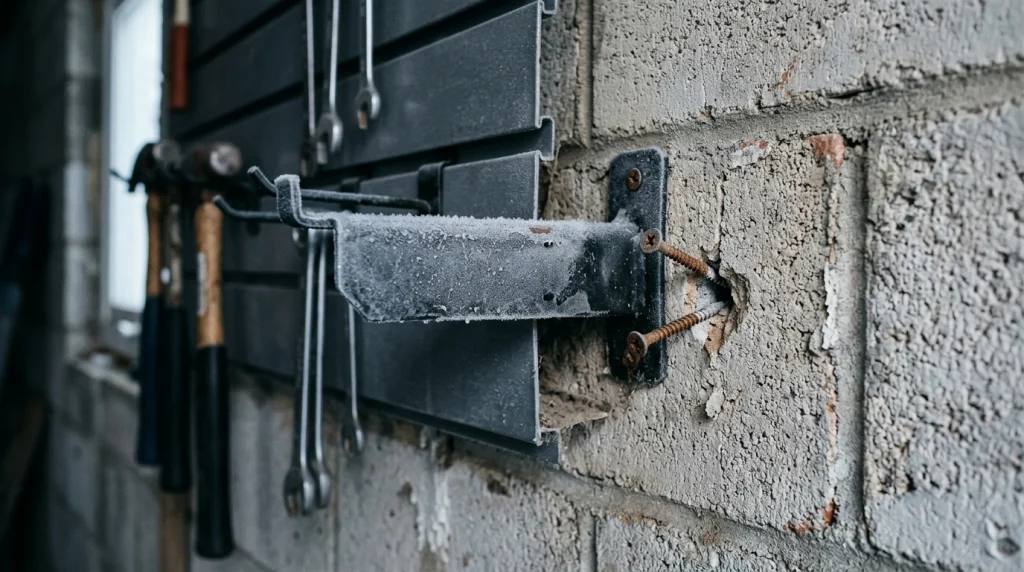
In Colorado’s Front Range, temperatures swing above and below freezing frequently. That freeze-thaw cycle doesn’t just affect roads; it affects garages, too.
Moisture seeps into small gaps, freezes and expands, then melts, repeating the cycle over time.
Over time, that movement weakens anchors and distorts panels. This is where Colorado’s garage storage climate becomes a real engineering problem, not just a design consideration especially when choosing materials like the best epoxy in Colorado, which must handle constant temperature swings and surface stress without failing.
You’ll often see early warning signs in:
- Wall-mounted systems are pulling slightly away
- Uneven shelf alignment
- Cracking sounds during temperature shifts
This is also where weaker materials struggle most. MDF-based systems, for example, absorb moisture more easily, which accelerates breakdown during repeated freeze cycles.
Many homeowners don’t connect the dots until multiple Garage Storage Systems in their home begin showing the same failure pattern.
Material Science: What Actually Holds Up
Not all storage materials respond to stress the same way; some swell, some crack, while others remain stable but need stronger support.
Here’s where things get interesting.
Garage storage durability depends on three things: material stability, load distribution, and installation quality. Systems that combine all three tend to last significantly longer in harsh climates.
Material Comparison in Real Conditions
| Material Type | When It Helps Most | Simple Cue | Common Mistake |
| MDF Panels | Low-humidity interiors | Feels heavy, smooth finish | Used in humid or cold garages |
| PVC Systems | Moisture-heavy environments | Lightweight, flexible | Underestimating load limits |
| Reinforced Composite | High-load + climate variation | Rigid, structured feel | Improper anchoring |
This is where reinforced PVC slatwall panels often enter the conversation. They tend to handle moisture and temperature swings better than traditional fiber-based options, though even they rely heavily on proper installation.
And yes, installation matters more than most people think.
Stud Spacing and Load Shifting in Homes
One overlooked issue in Garage Storage Systems is what happens behind the wall.
Stud spacing in many homes isn’t designed for heavy storage loads. That means weight distribution becomes uneven over time.
When loads shift even slightly, it creates stress points. And in colder climates, those stress points get worse as materials contract.
This is where professional slatwall installation becomes less of a luxury and more of a structural necessity.
You might not notice the problem until:
- Hooks begin sliding under the weight
- Wall sections start bowing outward
- Cabinets no longer sit flush
It’s rarely a single failure; it’s a chain reaction.
And once it starts, even well-built Garage Storage Systems can struggle to recover.
The Real Signs of System Failure
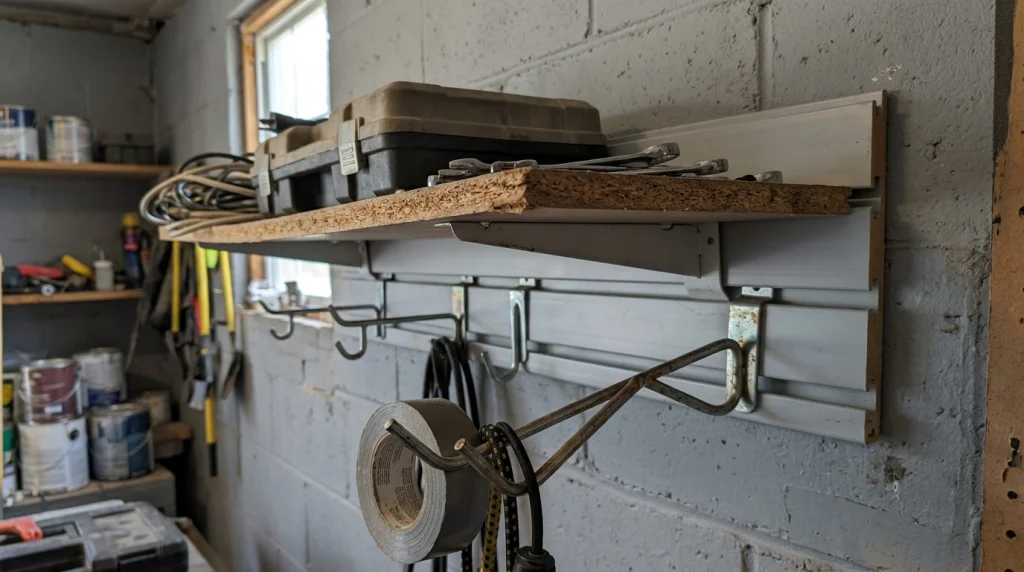
Most homeowners wait too long to act. The warning signs are usually visible but easy to dismiss at first.
A failing garage storage system usually shows early signs like wall separation, uneven shelving, loose anchors, and surface warping during temperature changes.
3 Signs Your System Won’t Survive Winter
- Panels no longer sit flush against the wall
- Hooks or brackets shift under moderate weight
- Visible cracking or bending appears near mounting points
These are not cosmetic issues. They indicate structural fatigue in Garage Storage Systems.
Once fatigue starts, it tends to accelerate with each passing season.
This is where garage wall system failure signs become impossible to ignore.
What Actually Works Long-Term
Long-lasting systems share a few traits:
- Structural anchoring into studs, not just drywall
- Materials designed for temperature variation
- Modular layouts that distribute weight evenly
- Professional calibration of load zones
The goal isn’t just storage. It’s controlled load management across shifting conditions.
This is where Garage Storage Systems begin to behave less like furniture and more like infrastructure.
And infrastructure needs planning.
Why Climate Changes Everything
It’s easy to underestimate how much climate affects storage performance.
But in Colorado, it becomes the deciding factor.
Materials expand and contract with temperature changes, fasteners loosen slightly over time, and moisture seeps into small gaps then freezes, gradually affecting the system’s stability.
Over time, those small shifts compound into visible damage.
This is why Garage Storage Systems that work in mild states often fail earlier in colder regions.
It’s not the product alone it’s the environment testing every weak point.
Conclusion: Storage That Survives Real Life
Garage organization isn’t really about shelves or cabinets. It’s about how those systems behave when conditions aren’t ideal.
And in Colorado, conditions rarely stay stable for long.
The systems that last are the ones designed with that reality in mind materials that resist moisture, structures that manage load properly, and installation methods that account for long-term movement.
Garage Storage Systems either adapt to the environment or slowly fall apart in it.
There’s very little middle ground.
For homeowners ready to move beyond temporary fixes and into something designed for long-term function, Open Space Garage approaches garage transformation with that exact mindset built around structure, climate, and real-world use rather than surface-level organization.
Build once, organize right create a garage designed for lasting function and real-life use.
Frequently Asked Questions
What makes a good garage storage system?
A good system balances material strength, proper wall anchoring, and weight distribution so it can handle seasonal climate changes without shifting or weakening.
What are the best practices for garage organization systems?
Use stud-based mounting, avoid overloading single points, and choose materials that resist moisture and temperature fluctuations.
How do garage storage systems fail over time?
Most fail due to gradual loosening of anchors, material expansion from moisture, and uneven load distribution across wall sections.
What services are included in a full garage transformation?
A complete service usually includes planning, decluttering, structural storage installation, and final layout optimization for usability.
Custom garage systems or standard kits?
Custom systems tend to perform better because they account for wall structure, climate, and actual storage behavior rather than generic sizing.
What are the top signs of garage system failure?
Visible warping, shifting brackets, loose mounts, and uneven shelving are early indicators of structural breakdown.
What causes garage storage systems to fail in cold climates?
Freeze-thaw cycles, moisture intrusion, and improper material selection are the most common causes.
How much do garage storage systems cost?
Costs vary widely depending on customization, materials, and installation complexity, with custom systems typically priced higher due to design precision